85% of ads fail to cross the 2.5-second active attention threshold.
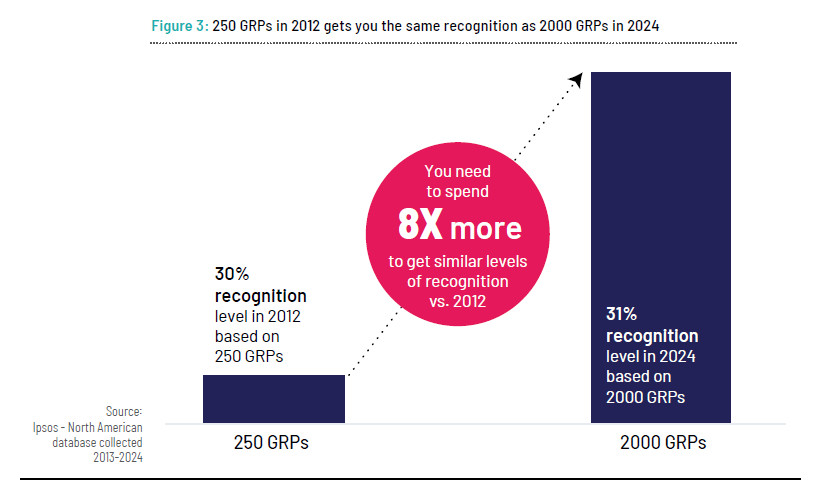
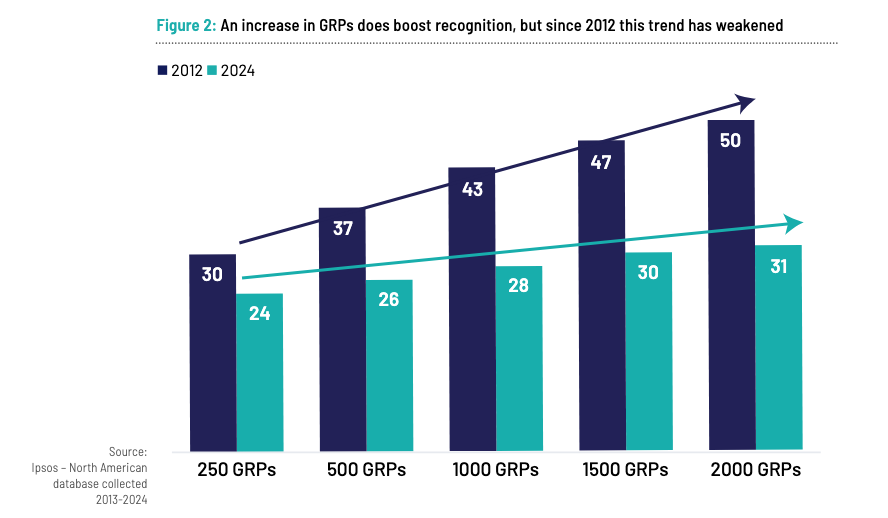
And advertisers must spend 8 times more to achieve the same level of recognition they achieved in 2012, according to the latest Ipsos publication “From Noise to Noteworthy”.
An old rule in advertising said: “Half the money I spend on advertising is wasted; the trouble is I don’t know which half”.
Today, it’s no longer only half that is wasted; it’s most of it!
And it’s huge: Global ad spend hit a trillion US dollars in 2024, and almost 70% of that went to digital.
So what’s the problem and is there anything that can be done about it?
Key learnings from the Ipsos view:
THE FACTS:
- For advertising to work, it must grab attention, be encoded, remembered, and linked back to the brand: it must trigger “memorable attention”
- But the proliferation of platforms and formats has introduced a lot of fragmentation.
- And advertisers have invested more in short-form content (TikTok, Instagram Reels, YouTube Shorts), social commerce, and influencer partnerships in recent years, to capture people’s attention in their own context.
- However, these platforms and ad formats have also been optimised for short-term performance metrics, such as engagement and conversions, rather than longer-term brand building.
- In such a context, consumers are simply no longer paying attention.
- Research shows that memory starts to form after about 2.5 seconds of active attention: 85% of ads fail to cross this 2.5-second threshold. Consumers are simply exposed to fleeting impressions that do not even link to the brand most of the times
ARE THERE ANY SOLUTIONS TO BETTER CAPTURE CONSUMERS’ ATTENTION?
Ipsos researchers suggest to act on 3 elements:
- Creative Experience
- Creative Ideas
- Empathy and Fitting in
1. Creative Experience means the ad must be viewed as entertaining, unique, and discussion-worthy to be memorable. Ads need to be distinctive and engaging, and disrupt consumer expectations who often make decisions in a “mindless stage”, driven by habits and subconscious influences.
2. Creative Ideas means that the audience can take something new away, fresher perspectives that are of value to them, beyond new product information. It can be about presenting new choices, lifestyles, or opportunities to the viewer.
3. Empathy and fitting in relates to the audience’s belief that the ad is targeted at them, reflecting their world, dreams, and challenges. When viewers see themselves in the ad, it fosters a deeper connection and enhances memorability.
Furthermore, brands assets and media strategy must be reconsidered differently:
- Research showed that brand assets (like colours, characters, sounds, taglines) are more effective at linking memorable attention to the brand than simply showing the logo or saying the name.
- High-performing ads used brand assets 52% more often than the average, thus weaving the brand into the story, making it easier to recognise the ad and the brand which is being advertised.
- A perfect example of that is the latest Kit-Kat “Phone Break” campaign
- TV is not dead: campaigns including TV in the mix achieved 7% higher potential reach and an 11% higher score for memorable attention compared to campaigns not using TV in the media plans.
- And obviously, when a campaign was recognised across 5 or more media channels, compared to just one, intent to take action rose by 21%.
KEY TAKE AWAYS IF YOU DON’T WANT TO SPEND YOUR MONEY FOR NOTHING:
- Dare
- Focus
- And be consistent in your brand building: if you can’t afford TV or 5 different channels, at least make sure your brand is recognized and your story is worth consumers’ attention!